
 19. 08. 2022
Tango Selection Top 22
 Classic, Orchestra, Series, Albums Tango

Tango professionals from all over the world present their 22 favorite titles. This is the motto of the latest series on the label of “Danza y Movimiento”. DJs, promoters, teachers and all those who are professionally involved with tango are part of the show.
The first edition of the new series includes 12 albums, compiled by tango DJs and promoters from the USA, Sweden, Great Britain, France, Germany, Holland, Iceland, Czech Republic and Montenegro.
What criteria did the tangueras and tangueros use to make their selection of titles? It is exciting to read what the respective motivation has been to present the recordings the way they can be heard now. Most of the compilations are danceable, but just not all of them.
DJ Biki from Utrecht has been inspired by her tango mentors – every single track is associated with a certain person for her. DJ Bianca Vrcan (La Montenegrina), like most others, had a problem: how to choose 22 works among more than 5000 recordings available for selection? Since she had sorted the database on which the selection was based alphabetically, she only got as far as “D”. So please don’t be surprised if the titles of her compilation all start with “A”, “B”, “C” or “D”.
09. 07. 2021
Travel - the new project on El Hierro
Travel

El Hierro is located in the middle of the Atlantic Ocean and the seventh and smallest of the main Canary Islands. Here, a project is currently being created for retreat and reflection, to breathe deeply and get in touch with nature. The island is sparsely populated, has no international airport and no wide sandy beaches. These are ideal conditions for people who want to take some time out, especially in this day and age. Our time needs people who are willing to stop and contemplate …
In this sense, we are in the process of transforming a former agricultural finca in the heart of the island. The soil offers ideal conditions to grow our own vegetables and fruits. The existing houses will be gradually transformed into foundations for a retreat alone, as a couple or even with children.
25. 08. 2020
Alvarado - a Cuban legend
Cuba, Albums Salsa and more
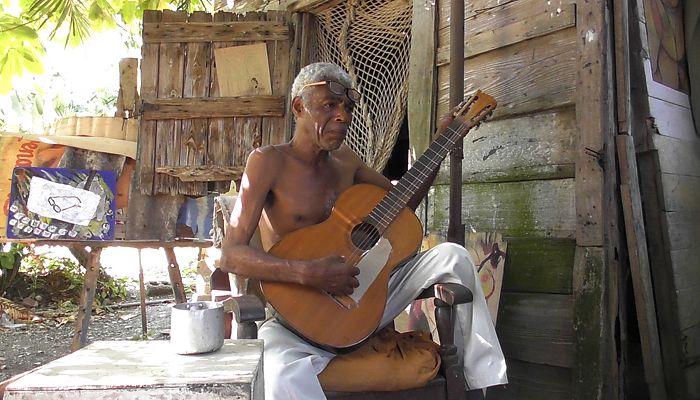
In front of the small, somewhat crooked wooden house, Alvarado is sitting in the shade of a palm tree with two musicians; they play the son „Tic Tac“ in honor of Antonio, who has just arrived. Alvarado calls his 80 year old friend Tic Tac, because you can hear his cane from afar: tic tac tic tac.
The other two musicians are friends who happened to be passing by. A former cop who plays the tres guitar. And a rum-loving neighbor who can make music on empty bottles. Antonio sits next to it contentedly, sometimes clapping along with the rhythm.
Alvarado almost always works like this – spontaneously and surrounded by the people of his hometown. His lyrics reflect events from his everyday life. Living in Pueblo Nuevo, a district of Mella in Eastern Cuba.
The big old sugar cane factory stands in the center of the settlement and towers above everything. It looks a bit like an old cathedral with two towers. “Antonio J. Mella” is written on the chimneys, the name of the co-founder of the Communist Party of Cuba.
06. 07. 2020
The Tango in Europe (Part 2)
Classic, Orchestra, Series, Albums Tango

In this article about the third and fourth album of the miniseries “Con Saludos desde Europa” you get a little insight into the current events of the first decades of the past century, which strongly influenced the lives and formations of the tango musicians on these albums. Family connections within the tango scene and musical developments of individual musicians are mentioned, as well as the author‘s personal assessments of individual titles. The photo shows Rafael Canaro.
The third album presents recordings with Quentin Verdu, the unforgettable Alina De Silva and Auguste Jean Pesenti.
With his interpretation and the fresh arrangements of the Tango classics „Torrente“, „Malena“, „Sur“ (for me the best interpretation ever) and „Cancion desesperada“ Quintin Verdu is a pleasure to listen to and presents the skills of the French singers in an impressive way.
Unfortunately, tango lost its popularity quickly in Europe after the war and with the beginning of the 50s the musicians had to earn their living with other musical styles.
Regarding Alina De Silva: I think all of Argentina would have been willing to adopt her as an Argentinean. But this wonderful Tango singer is Peruvian and eventually died in her home country Lima. In 1925 she came to France together with her husband Alfonse de Silva and his orchestra. They lived there for about 15 years before they returned to their native country.