
 29. 03. 2023
Say hello to the Librotango companion albums!
 Classic, Orchestra, Series, Albums Tango
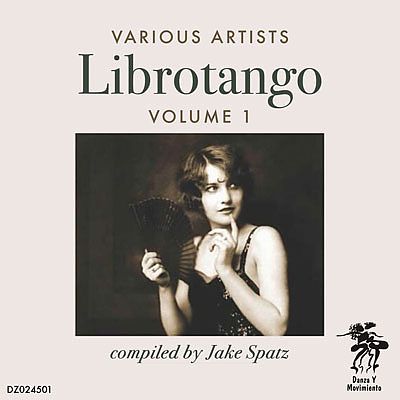
Danza y Movimiento is happy to present this new expansion to its catalogue. Compiled by teacher, DJ, and translator Jake Spatz, each of these albums matches a volume in the Librotango series of books—-a bilingual presentation of tango lyrics in singable English translations. Aimed at veteran dancers and newcomers alike, the selections offer a mix of classic dance tunes and lucid renditions by solo singers, highlighting the role of lyrics in the genre.
The books themselves are available internationally through Amazon and other retailers. The translations convey the sense and follow the melody of the originals, and their extensive notes present research on the songs and their authors, detailing the role of stage plays and movies in Golden Age’s “industry of song.” Every book opens with a unique introduction on the themes and images of the tango, and also includes bios of all featured lyricists.
19. 08. 2022
Tango Selection Top 22
Classic, Orchestra, Series, Albums Tango
Tango professionals from all over the world present their 22 favorite titles. This is the motto of the latest series on the label of “Danza y Movimiento”. DJs, promoters, teachers and all those who are professionally involved with tango are part of the show.
The first edition of the new series includes 12 albums, compiled by tango DJs and promoters from the USA, Sweden, Great Britain, France, Germany, Holland, Iceland, Czech Republic and Montenegro.
What criteria did the tangueras and tangueros use to make their selection of titles? It is exciting to read what the respective motivation has been to present the recordings the way they can be heard now. Most of the compilations are danceable, but just not all of them.
DJ Biki from Utrecht has been inspired by her tango mentors – every single track is associated with a certain person for her. DJ Bianca Vrcan (La Montenegrina), like most others, had a problem: how to choose 22 works among more than 5000 recordings available for selection? Since she had sorted the database on which the selection was based alphabetically, she only got as far as “D”. So please don’t be surprised if the titles of her compilation all start with “A”, “B”, “C” or “D”.
06. 07. 2020
The Tango in Europe (Part 1)
Classic, Orchestra, Series, Albums Tango
Well-known and less well-known tango orchestras from the late 20s to the late 40s are presented on a total of four albums entitled „Con Saludos desde Europa“. All titles were recorded in Europe. In addition to orchestras based in Europe, there are others who have only toured Europe for a short time. Some of them have been completely forgotten these days. This article provides background information on the orchestras and the musicians of the four albums. This music is also suitable for DJs when putting together tandas on a milonga.
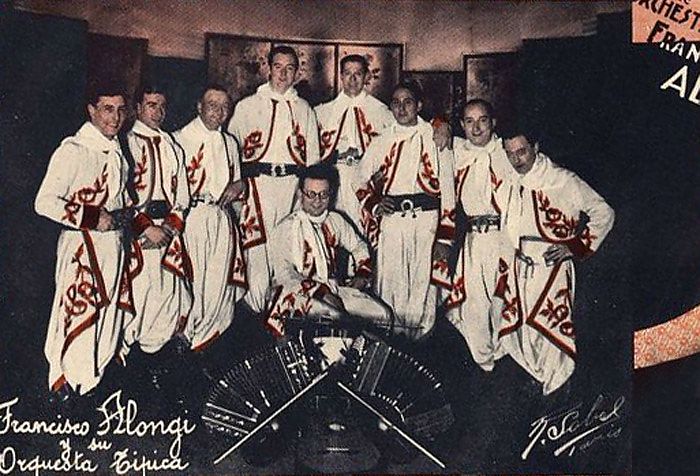
The first album of the small series includes recordings by the orchestras of Quintin Verdu, Jose M. Lucchesi, Francisco Alongi and Rafael Canaro.
Quintin Verdu was born to Spanish parents in Algeria and came to Paris at the age of 10, where he attended the conservatory. At 21, he met Rafael Canaro and Miguel Orlando, who hired him as a pianist. He went on a European tour with Rafael Canaro until 1935 and later accompanied Tino Rossi, whom he soon left to form his own orchestra.
With their distinctive style, they were very successful until the outbreak of war. He was captured and released in 1941. His orchestra later became the house band of the famous “Olympia” in Paris. There are four tracks on this album that present the distinctive style of this orchestra.
*José Marcos *Lucchesi came to Paris from Brazil as the son of a Corsican family and, following the zeitgeist, also fell in love with the tango in the 1930s. After the war he switched to popular dance music with his works.
*Francisco Alongi *came to France from Tunisia in 1921 and became a pianist for Manuel Pizarro and later for Tano Genaro. He often accompanied the famous tango singer Rosita Barrios. In 1932 he founded his own orchestra.
Rafael Canaro, the little brother of the great Francisco, was also known as Argentina‘s tango ambassador to Europe. The recordings with Luis Scalon are from 1938 and were taken in Paris. Due to the outbreak of war, Rafael Canaro then returned to his native Argentina.
06. 07. 2020
The Tango in Europe (Part 2)
Classic, Orchestra, Series, Albums Tango
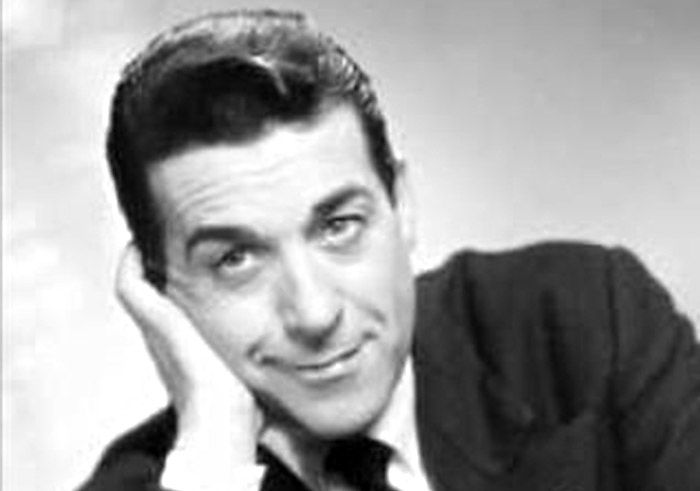
In this article about the third and fourth album of the miniseries “Con Saludos desde Europa” you get a little insight into the current events of the first decades of the past century, which strongly influenced the lives and formations of the tango musicians on these albums. Family connections within the tango scene and musical developments of individual musicians are mentioned, as well as the author‘s personal assessments of individual titles. The photo shows Rafael Canaro.
The third album presents recordings with Quentin Verdu, the unforgettable Alina De Silva and Auguste Jean Pesenti.
With his interpretation and the fresh arrangements of the Tango classics „Torrente“, „Malena“, „Sur“ (for me the best interpretation ever) and „Cancion desesperada“ Quintin Verdu is a pleasure to listen to and presents the skills of the French singers in an impressive way.
Unfortunately, tango lost its popularity quickly in Europe after the war and with the beginning of the 50s the musicians had to earn their living with other musical styles.
Regarding Alina De Silva: I think all of Argentina would have been willing to adopt her as an Argentinean. But this wonderful Tango singer is Peruvian and eventually died in her home country Lima. In 1925 she came to France together with her husband Alfonse de Silva and his orchestra. They lived there for about 15 years before they returned to their native country.
13. 04. 2020
MKR - a new tango label
Classic, Orchestra, Series, Albums Tango
What did it sound like when a tango was recorded in the 30s or 40s of the last century? For several years Matthias Kroll has been dedicating a lot of time to get closer and closer to the original recording in his sound restorations.Recently he has founded his own label. “Matthias Kroll Records” (MKR), which is distributed exclusively by Danza y Movimiento. In the following text Matthias Kroll himself tells how he became a tango restorer:
The Argentine Tango has a distinctive charm and once you have succumbed to it, you can usually never get away from it again. Like many, I first came into contact with it in the 90s when the Gotan Project started in Paris and hybrids like Tanghetto were played in the clubs. The free way of dancing to this music fascinated my wife and me and we had to learn it. After a longer break we got back into the milonga scene and I became more and more involved with the tango music of the past. I started to search for old recordings and to translate the lyrics. Once you are immersed in the world of the 20s/30s and 40s, there are so many forgotten tangos/texts and people to discover. Our dance style changed quite fast and we actually only dance in close embrace, where both partners feel and dance the music together as an inseparable unity.